Reluctant winemaker no more!
More than a 1,000 bottles of wine did the job.

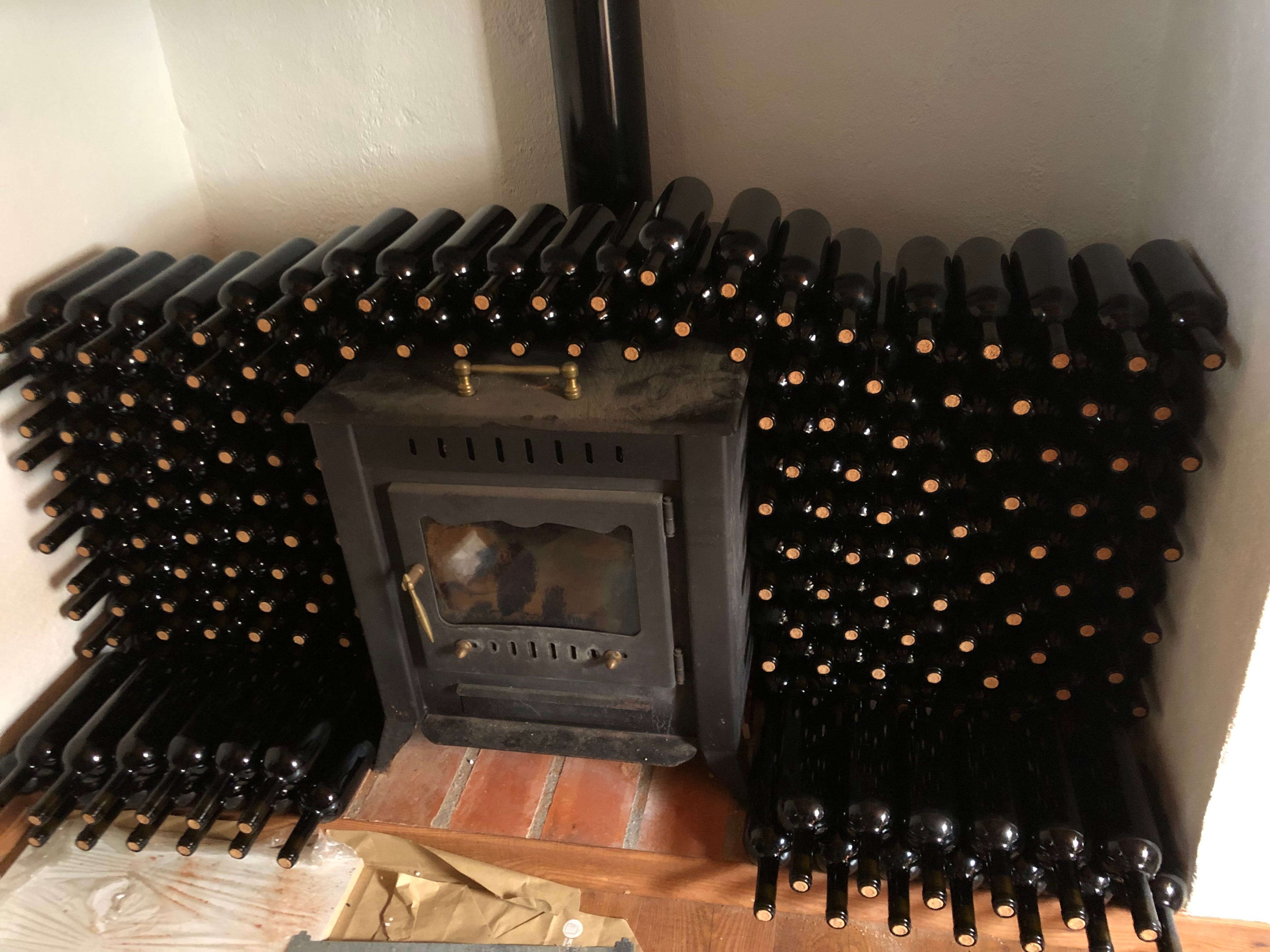
My only excuse for being a reluctant Substack writer in the past few months is that I’ve been doing my utmost to shake off my reluctance at winemaking. It’s been quite a slog, I apologise profusely to faithful readers, but I can now confidently say: wine job done, and I have time for the keyboard again.
The ramshackle outhouse I humbly call my wine cellar, my library and the laundry room are now stacked full of about 1,200 bottles of my best creation yet; wholesome, hand-made (artisanal even), ecological red vintage 2025.
It was tiring, and predictably enough, claimed yet another major part of the year with heavy wine work, which lasted about six weeks. It also blew apart my pre-summer plans of clearing the fields, so they are now a grassy mess, even as the first baby grapes of vintage 2026 appear. Cutting the grass must now be done in early June, in the fast-approaching, brutal summer heat. But hey, as I gaze across my makeshift wine cellars, I can deal with all of this: I’ve got serious amounts of stock.
As I trundle around the vineyard and the farmhouse these days, I admit that I struggle not to think about the bottles. They got there after a full, agonizing grape growing cycle, which started with last year’s harvest, followed by fermentation, pressing and aging in barrels. Then – unlike in 2025 when I had only a fraction of this amount – I washed bottles, dried bottles, emptied the barrels into the bottles and corked the bottles (all by hand). My repeated pushing motion on the mechanical corking machine now occasionally hits my muscles with an agonizing, involuntary spasm.


While this is still only the second year that I actually made wine, I can honestly report that my conversion is complete, I’m all in, my reluctance is gone: it’s impossible to stay reluctant with this amount of bottles of decent red wine lying around the house. I don’t know if this is a bit like those political converts who suddenly swing from one extreme to another, but I do now believe that winemaking could be the world’s most enjoyable job, something I read somewhere at some point in the recent past.
It’s not only about this being a decent chunk of wine; for big winemakers it’s pretty puny. The real reason is that I learnt a lot from the first year, introduced changes and it worked. For one, I did three harvests last year over a two-week period, spreading and cutting the risk of late-summer pests hitting the grapes and extending the alcohol range in each barrel to between 13 percent and 14.5 percent. I also did regular lab tests of the wines between harvest time and bottling, avoiding nasty surprises like the one I had a year earlier with a small batch I would rather forget about. The key seems to be to bottle before the summer heat sets in, so this wine aged in barrels for just under eight months.
That said, a subtle fear also grips me, as this amount of wine suddenly gives me options. I could always take the gifting of a bottle of wine to dinner parties to new heights of generosity by bringing, say, three every time. That would doubtless make me more popular than just glugging all the stuff myself, although I would of course have personal supplies for quite some time if I kept it all.
No, the real fear is the commercial angle. Since pretty much everyone I meet asks if I’m now going to sell, I feel compelled to answer. Some people’s eyes seem to twinkle when they ask the question, no doubt thinking that this is an easy route to fortune and fame as a wine producer.
This is not so. For one, there are hundreds, if not thousands, of big and small wine makers in Portugal, competing for drinkers. Then there are the endless reminders of how global wine drinking is plummeting. That said, at least Portugal leads global consumption, in per capita terms, which is reassuring. I don’t quite know why this is so, but low tax on alcoholic drinks and the influx of tourists and foreigners living here in recent years probably helps.
Local winemaking friends have also repeatedly whispered in my ear that you can’t really expect to make money in this business. Maybe they’re saying it because they fear the competition, but I somehow doubt that.
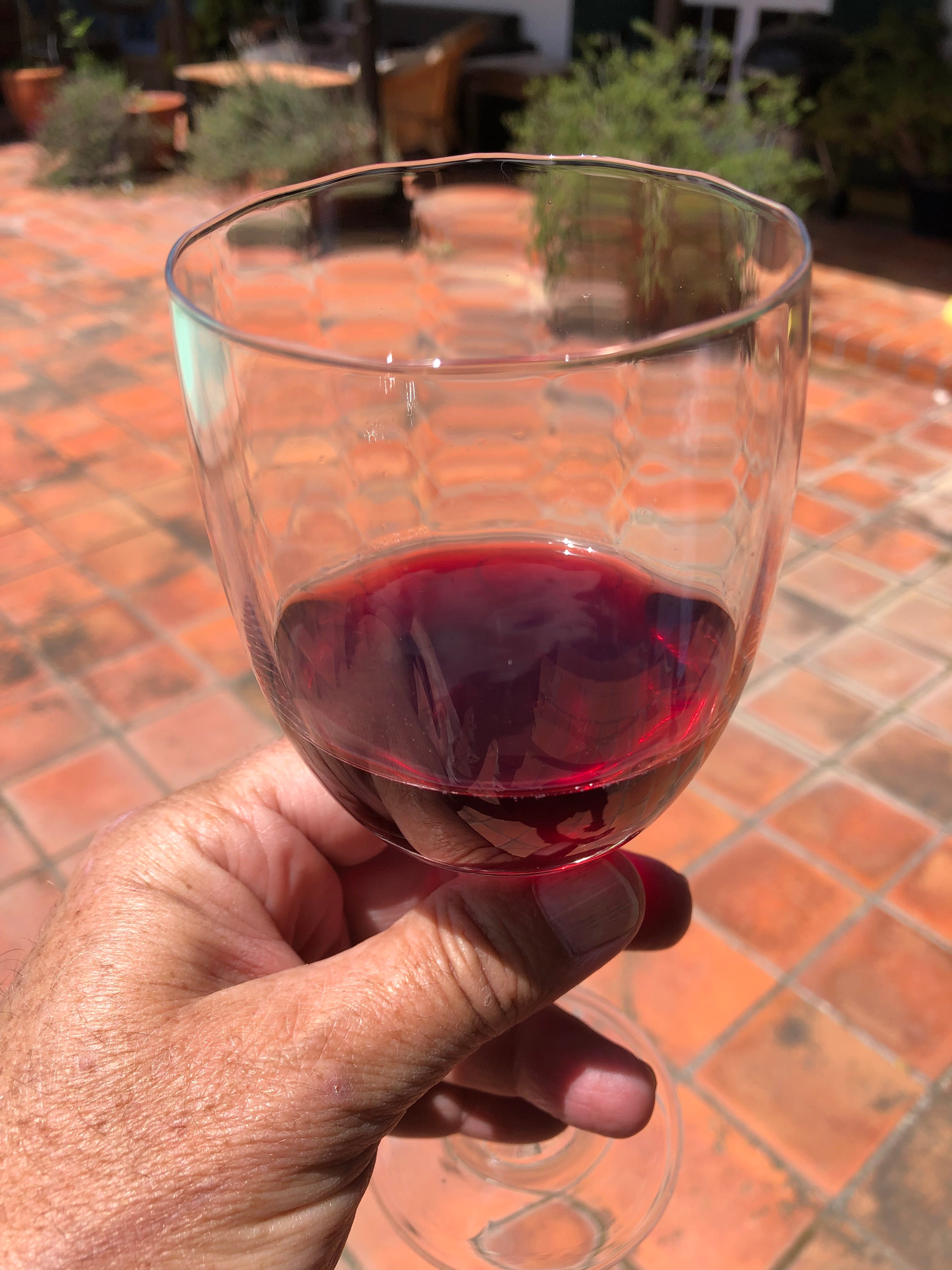
Of course, the real test is only just beginning. Now people need to taste it, while I twitch and sit pale-faced watching their every facial expression as they take their first sip. A few friends did taste it a couple of months ago, straight out of the barrels, before bottling. They liked it, or at least they said so. Needless to say, I like it and can report that it’s progressed massively from my first year of production.
A few questions I have considered:
Does the wine have a story? Yes, there is even a book to prove it.
Does the wine have body? Yes, I think so.
Is it drinkable? Yes, very much so.
Is it natural? Yes, it is entirely hand-made and not a drop of chemicals has gone into it, apart from a small dose of sulphites, which is below Europe’s legal threshold for organically produced red wine. Fermentation took place with only the natural yeasts present in the grapes.
What’s the grape type? Castelão, which has some similarities to Grenache, which is grown in France and Spain. The grape is widespread in the Palmela wine region south of Lisbon.
What are the vines like? At least 50-years-old (I’m still finding out exactly how old and plan another Substack on this in coming weeks).
Anyway, if you do fancy a taste, that can be arranged. If you want to buy a bottle or two after that, I would of course be absolutely delighted.
Snyggt jobbat, Axel! Ihärdig måste jag säga. Kul å läsa dig! Inte bara teoretiker, nu även praktiker med gott vin. Hoppas ses framöver. Cheers
No price ? Case discount ? I mean a Norge vintner has to make a living. Scribbling never pays !